 Servers-Rust.org
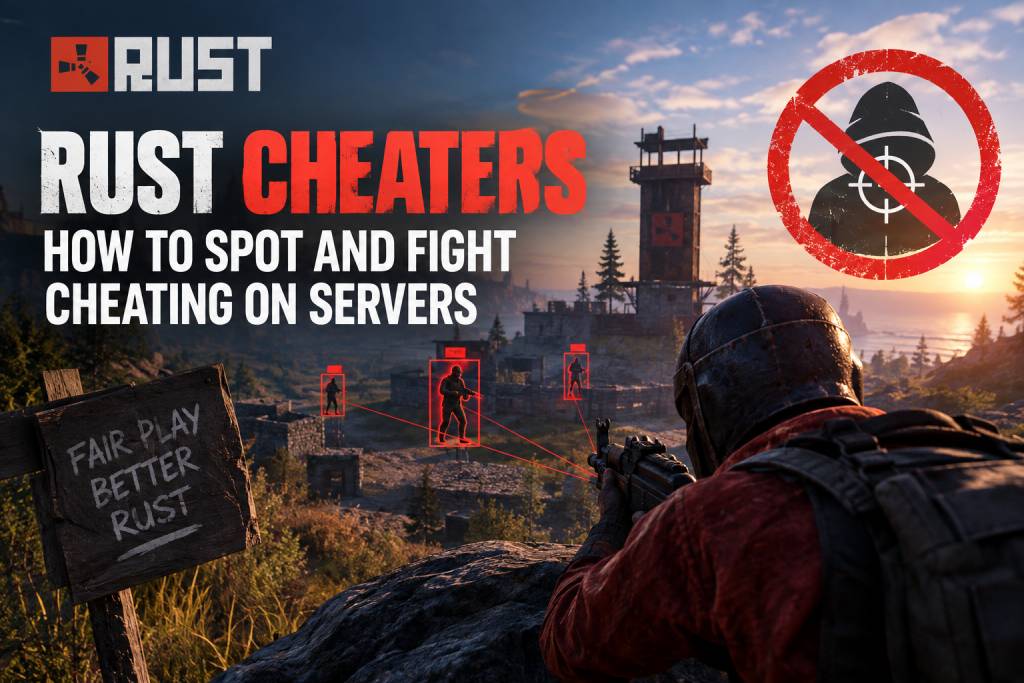
Rust is one of the most competitive survival games available today. Players spend hours collecting resources, building bases, controlling monuments, and fighting other groups for territory. Because PvP plays such an important role in Rust, cheating can have a serious impact on the experience of an entire server.
A single cheater can ruin raids, wipe groups, and drive legitimate players away. For server administrators, dealing with cheaters is therefore an important part of maintaining a healthy and competitive Rust community.
But how can you recognize a cheater, and what can you do when you suspect someone is using cheats?
What Is Considered Cheating in Rust?
Cheating generally means using unauthorized software or modifications to gain an unfair advantage over other players.
Common examples include software that provides information or abilities that are not normally available to the player. Depending on the cheat, this can affect aiming, player awareness, movement, or the information visible on screen.
However, it is important to remember that not every unusually good player is a cheater.
Rust has experienced players who have thousands of hours in the game. They can have excellent aim, understand recoil patterns, predict enemy movements, and recognize common player behavior. A suspicious kill by itself is rarely enough evidence for a ban.
The best approach is to look for repeated patterns rather than judging a player based on a single encounter.
How to Recognize a Possible Cheater
There are several signs that can justify closer investigation.
Unusual Accuracy
Extremely accurate shooting can sometimes indicate cheating, especially when a player consistently hits difficult shots under circumstances where such accuracy would be unusual.
However, accuracy alone should not be treated as proof. Experienced Rust players can achieve impressive results with weapons such as the AK or M39.
Look for consistency over multiple fights rather than focusing on one spectacular shot.
Suspicious Awareness
Another warning sign is when a player appears to know exactly where opponents are without an obvious source of information.
For example, a player might repeatedly move directly toward hidden enemies, pre-aim at players behind cover, or react to opponents before they have a reasonable way of knowing that someone is there.
Again, context matters. Rust players can hear footsteps, gunshots, doors, furnaces, and other sounds from significant distances. They may also know common hiding locations and understand how other players usually rotate around monuments.
Impossible-Looking Reactions
Very fast reactions can sometimes be suspicious, particularly when combined with other unusual behavior.
A player who repeatedly reacts instantly to enemies appearing from unexpected locations may deserve additional investigation. One fast reaction, however, is not enough to establish that someone is cheating.
Consistent Suspicious Behavior
The strongest warning sign is usually a pattern.
If a player repeatedly demonstrates unusual awareness, extremely consistent aim, suspicious reactions, and behavior that cannot be reasonably explained by game knowledge or sound cues, administrators should investigate further.
Use Spectating and Server Logs
Server administrators have significantly more tools available than regular players.
When possible, spectate the suspected player and observe their behavior over an extended period.
Do not immediately ban someone because of one suspicious kill. Watch several engagements and look for repeated patterns.
Server logs can also provide useful information about player activity. Depending on the server configuration and plugins being used, administrators may be able to review combat events, player activity, connections, and other relevant information.
The goal is to collect enough evidence to make a reliable decision.
Rust Anti-Cheat Protection
Rust uses anti-cheat technology to detect unauthorized software and suspicious behavior. Server administrators should keep their server software and anti-cheat-related components properly updated.
Anti-cheat systems are an important layer of protection, but they should not be the only tool used by administrators.
No automated system can perfectly identify every suspicious situation. Server owners should combine automated protection with active moderation and good server administration practices.
What Players Should Do When They Suspect a Cheater
Regular players should avoid immediately accusing someone in global chat.
Public accusations can create unnecessary conflicts, especially when the suspected player is simply very experienced.
Instead, collect useful information:
- Player name
- Steam profile
- Approximate time of the incident
- Location where it happened
- What happened
- Video or screenshots, if available
- Any other unusual behavior
Then send the information to the server administrators.
A short video showing several suspicious encounters is usually much more useful than a message saying, "This guy is hacking."
Why Video Evidence Is Important
Video recordings can help administrators understand what actually happened.
A suspicious situation may look completely different when viewed from another perspective. For example, a player might appear to know someone's location when they actually heard footsteps or saw a small movement.
Video evidence also makes it easier to compare multiple incidents involving the same player.
Players who frequently play on competitive servers may benefit from recording their gameplay, especially when they encounter suspicious behavior.
Avoid False Bans
One of the biggest mistakes a server administrator can make is banning players without sufficient evidence.
False bans can damage a server's reputation just as quickly as allowing cheaters to remain.
Before taking action, administrators should consider alternative explanations.
Could the player have heard the enemy?
Could they have seen movement?
Was the enemy standing in a predictable location?
Does the player have thousands of hours of Rust experience?
Was the unusual behavior repeated?
These questions can help distinguish legitimate high-level gameplay from genuinely suspicious behavior.
Build Clear Server Rules
A well-managed Rust server should have clear rules regarding cheating and player reports.
Players should know how to report suspicious behavior and what information they should provide.
For example, a server can provide a dedicated Discord channel or ticket system for reports. Administrators can then review reports privately instead of allowing accusations to spread through global chat.
Clear rules also make moderation more consistent.
If players know that cheating results in a permanent ban, while false accusations are not tolerated, the community is less likely to turn every unusual death into a cheating accusation.
Keep Your Server Community Healthy
Anti-cheat protection is only one part of running a successful Rust server.
A healthy server also needs active administrators, reliable monitoring, clear rules, and responsive moderation.
Players are much more likely to stay on a server when they believe that reports are taken seriously and suspicious behavior is investigated fairly.
This is especially important during large raids, wipes, and competitive events. These situations often generate more reports because players are under pressure and emotions are high.
Administrators should remain objective and focus on evidence rather than accusations.
What Should You Do If You Are Banned?
If you believe you were incorrectly banned from a Rust server, contact the server administration team and provide any relevant information.
Do not attempt to evade the ban using another account. Instead, use the server's appeal process if one is available.
A professional appeal should be calm and factual. Explain what happened and provide evidence that may help administrators review the decision.
Good server communities should have a reasonable process for reviewing questionable bans.
Final Thoughts
Cheating can seriously damage the Rust experience, but fighting cheaters requires more than simply banning everyone who plays unusually well.
The best approach combines anti-cheat protection, server monitoring, administrator experience, player reports, and reliable evidence.
Players should report suspicious behavior instead of starting public arguments, while administrators should investigate patterns carefully before taking action.
The goal is not simply to remove suspicious players. The goal is to create a fair environment where legitimate players can compete, build, raid, and enjoy Rust without worrying that someone is gaining an unfair advantage.
A well-moderated server ultimately benefits everyone. When players trust the administration and believe that cheating is taken seriously, they are more likely to stay, participate in the community, and return for future wipes.